PHILANTHROPY News
Philanthropy at major events is not a new phenomenon. Charity galas have anchored fashion weeks for half a century. amfAR has been raising tens of millions at Cannes since the 1990s. Polo benefits, hospital fundraisers, and celebrity auctions have raised real money for as long as the modern event calendar has existed. What is new is not the act of giving. What is new is where giving now sits in the architecture of the event itself.
Walk the perimeter of any major global event in 2026, and two parallel economies run side by side. One is the official commercial program. The sponsorship tiers, the branded suites, and the on-site activations are engineered to extract attention and convert it to lead data. The other is quieter, more recent in its current form, and arguably more interesting. Charity functions are embedded inside the art fair sales infrastructure. Community awards on Formula 1 fanzone stages. Water-access coalitions launched out of the Davos plenary sessions. Meal-box programs run from racing paddocks. The biggest moments on the cultural calendar are increasingly being engineered so the act of attending, transacting, or activating also moves capital toward causes. The brands that show up best are the ones treating that integration as a programming choice rather than a press release.
Call it the generosity layer. It is not a replacement for the older charity-gala model, which continues to do exactly what it has always done. It is a structural shift in how giving is built into the commercial design of the event itself, measured alongside ROI, sponsorship value, and audience growth.
The events that anchor the global calendar are no longer just stages for commerce. They are infrastructure for collective action.
The reason this integration is happening now is structural. Audiences have become harder to reach through advertising, harder to convince through messaging, and considerably easier to move through participation. The shift from advertising economies to participation economies is the defining marketing story of this decade, and the generosity layer is the most participatory form of brand activation that currently exists. It asks the audience not to watch, not to scroll, not to share, but to act. And the events themselves are providing the most credible distribution channel for that ask.
Art Basel and the Embedded Donation
Access by Art Basel is the cleanest example of what the generosity layer looks like at scale. Launched ahead of Art Basel Miami Beach 2023 in collaboration with the digital platform Arcual, Access connects collectors with galleries through a sales mechanism that requires an additional philanthropic contribution at the moment of purchase. The structure is simple. Every artwork sold through Access carries a mandatory donation of at least ten percent of the sale price, directed to either The Miami Foundation or the International Committee of the Red Cross. Buyers do not opt in to generosity. The transaction itself is the generosity.
What makes Access notable is not that it raised money. Art fair charity auctions have raised money for decades. What makes Access notable is that Art Basel built giving into the core sales infrastructure, not the after-party. The platform debuted with works by Hernan Bas, Katherine Bradford, Jenny Holzer, Angel Otero, and more than a dozen participating galleries. The signal to collectors was structural. Serious participation in this market now includes a giving component. The signal to other event operators was equally structural. Philanthropy can be a product feature.
The same instinct shows up across Miami Art Week in different formats. Fiat auctioned three custom 500e electric vehicles designed in collaboration with Armani, Bulgari, and Kartell, with proceeds directed to environmental causes. Absolut Elyx ran a multi-city water-truck activation with Water For People, culminating in a sculpture auction at Art Basel Miami Beach. Each of these is a recognizable pattern. Take the most photographed image of the week, attach it to a cause, let the audience do the amplification.
Formula 1 and the Paddock as Platform
Few event franchises have moved as deliberately into the generosity layer as Formula 1. The sport now operates a portfolio of supported charities, including Make-A-Wish International, Mission 44, Race Against Dementia, and Great Ormond Street Hospital, with race weekends used as fundraising and engagement platforms across the 24-race calendar. In the first half of 2024 alone, F1-supported charities raised more than £500,000 and hosted more than 300 children across paddock tours, driver Q&As, and trackside experiences.
The more structurally interesting development arrived in 2025 with the launch of the F1 Allwyn Global Community Award. Built around F1’s multi-year partnership with the lottery operator Allwyn, the award places local community organizations on a global stage, with a rotating panel of judges from F1, Allwyn, and the local race promoter selecting winners at each Grand Prix. Each winner receives a €100,000 donation, a trophy presented on the F1 Fan zone stage, and a trip to a Grand Prix. The inaugural award went to Stichting HandicapNL, a Dutch organization focused on making festivals and major events accessible for people with disabilities.
The award is not a donation made adjacent to the race. It is part of the race weekend, presented in the same physical space where fans gather to watch cars qualify.
Read the structure carefully. A commercial partnership between F1 and a gambling operator is being deployed as a recurring local-impact mechanism, with the event itself as the distribution channel. This is the participation economy logic applied to philanthropy. Beyond the award, F1 has donated more than 21,000 nutritious meal boxes to families in Bromley since 2024 through a partnership with the local council. That is a quieter program than the fanzone awards ceremony, but it is the kind of sustained, locally rooted giving that builds the brand asset no trackside billboard ever could.
Davos and the Coalition Launch
At the institutional end of the spectrum, the World Economic Forum has spent the last several years turning Davos into a launchpad for corporate-philanthropic coalitions. The 2024 launch of GAEA, Giving to Amplify Earth Action, was framed explicitly as a vehicle to unlock the trillions of dollars in annual financing required to reach net zero and reverse nature loss. The mechanism is the public-private-philanthropic partnership, a structure designed to bring corporate balance sheets into proximity with philanthropic capital and government policy.
Davos 2026 extended the pattern. The Get Blue platform was launched on behalf of Water.org, bringing Amazon, Gap, Starbucks, and Ecolab together to scale clean water access from 85 million people to a target of 200 million by 2030. The ACT Ocean initiative consolidated business engagement on ocean priorities under a single umbrella, with strategic agreements signed with the UAE government and the Water Resilience Coalition. The 2026 GAEA Awards recognized partnerships across five categories, presented during the annual meeting.
The Davos pattern reveals something specific about how giving functions at events. Announcements made on the Magic Mountain carry coalition weight that the same announcements would not carry if released from a corporate communications office. The event provides validation, distribution, and a built-in audience of decision-makers. For the brands involved, the giving commitment is also a positioning decision. A public alignment with a set of partners and causes that becomes part of the corporate identity going forward.
Why the Generosity Layer Works
Three forces explain why giving has moved from the periphery of major event programming to its center.
Participation outperforms exposure. Audiences at global events are sophisticated, time-pressured, and over-marketed. A logo on a step-and-repeat is a low-trust signal. A meaningful donation tied to attendance, or an integrated charitable mechanism inside a transaction, is a high-trust signal. The conversion math favors the latter.
Local relevance is a moat. Every host city carries an audience the event has imported and a community the event has displaced or strained. Brands that program for the local layer, whether that means food access in race host cities, accessibility infrastructure at festivals, or water systems in resource-stressed regions, earn a kind of permission that no amount of paid media can manufacture. F1’s meal-box partnership with Bromley is a more durable brand asset than any trackside billboard.
Generosity is a defensible category. In a saturated activation landscape where every brand has access to the same AI photo booths, VR experiences, and influencer rosters, integrated giving is one of the few moves competitors cannot easily replicate. A genuine partnership with a charity takes time to build, time to operationalize, and time to earn credibility for. That difficulty is the asset.
The Forward Read
The next phase will move past the announcement-and-photo-op model toward measurable, audience-facing impact tied to specific event moments. The charity gala will continue to exist. The benefit auction will continue to exist. What will grow alongside them is the embedded mechanism. More transaction-built giving in the Access mold. More local-impact awards in the F1 Allwyn mold. More coalition launches in the Davos GAEA mold. Expect brands that have historically treated philanthropy as a tax line to begin treating it as a marketing channel, and brands that have historically treated marketing as a sales lever to begin treating it as a values lever.
The events that anchor the global calendar were built on the premise that gathering people together creates value. The generosity layer extends that premise. Gathering people together also creates the conditions for collective action, and the architecture is finally catching up. For the brands paying attention, that is the activation worth building.
Philanthropy at major events is not a new phenomenon. Charity galas have anchored fashion weeks for half a century. amfAR has been raising tens of millions at Cannes since the 1990s. Polo benefits, hospital fundraisers, and celebrity auctions have raised real money for as long as the modern event calendar has existed. What is new is not the act of giving. What is new is where giving now sits in the architecture of the event itself.
Walk the perimeter of any major global event in 2026, and two parallel economies run side by side. One is the official commercial program. The sponsorship tiers, the branded suites, and the on-site activations are engineered to extract attention and convert it to lead data. The other is quieter, more recent in its current form, and arguably more interesting. Charity functions are embedded inside the art fair sales infrastructure. Community awards on Formula 1 fanzone stages. Water-access coalitions launched out of the Davos plenary sessions. Meal-box programs run from racing paddocks. The biggest moments on the cultural calendar are increasingly being engineered so the act of attending, transacting, or activating also moves capital toward causes. The brands that show up best are the ones treating that integration as a programming choice rather than a press release.
Call it the generosity layer. It is not a replacement for the older charity-gala model, which continues to do exactly what it has always done. It is a structural shift in how giving is built into the commercial design of the event itself, measured alongside ROI, sponsorship value, and audience growth.
The events that anchor the global calendar are no longer just stages for commerce. They are infrastructure for collective action.
The reason this integration is happening now is structural. Audiences have become harder to reach through advertising, harder to convince through messaging, and considerably easier to move through participation. The shift from advertising economies to participation economies is the defining marketing story of this decade, and the generosity layer is the most participatory form of brand activation that currently exists. It asks the audience not to watch, not to scroll, not to share, but to act. And the events themselves are providing the most credible distribution channel for that ask.
Art Basel and the Embedded Donation
Access by Art Basel is the cleanest example of what the generosity layer looks like at scale. Launched ahead of Art Basel Miami Beach 2023 in collaboration with the digital platform Arcual, Access connects collectors with galleries through a sales mechanism that requires an additional philanthropic contribution at the moment of purchase. The structure is simple. Every artwork sold through Access carries a mandatory donation of at least ten percent of the sale price, directed to either The Miami Foundation or the International Committee of the Red Cross. Buyers do not opt in to generosity. The transaction itself is the generosity.
What makes Access notable is not that it raised money. Art fair charity auctions have raised money for decades. What makes Access notable is that Art Basel built giving into the core sales infrastructure, not the after-party. The platform debuted with works by Hernan Bas, Katherine Bradford, Jenny Holzer, Angel Otero, and more than a dozen participating galleries. The signal to collectors was structural. Serious participation in this market now includes a giving component. The signal to other event operators was equally structural. Philanthropy can be a product feature.
The same instinct shows up across Miami Art Week in different formats. Fiat auctioned three custom 500e electric vehicles designed in collaboration with Armani, Bulgari, and Kartell, with proceeds directed to environmental causes. Absolut Elyx ran a multi-city water-truck activation with Water For People, culminating in a sculpture auction at Art Basel Miami Beach. Each of these is a recognizable pattern. Take the most photographed image of the week, attach it to a cause, let the audience do the amplification.
Formula 1 and the Paddock as Platform
Few event franchises have moved as deliberately into the generosity layer as Formula 1. The sport now operates a portfolio of supported charities, including Make-A-Wish International, Mission 44, Race Against Dementia, and Great Ormond Street Hospital, with race weekends used as fundraising and engagement platforms across the 24-race calendar. In the first half of 2024 alone, F1-supported charities raised more than £500,000 and hosted more than 300 children across paddock tours, driver Q&As, and trackside experiences.
The more structurally interesting development arrived in 2025 with the launch of the F1 Allwyn Global Community Award. Built around F1’s multi-year partnership with the lottery operator Allwyn, the award places local community organizations on a global stage, with a rotating panel of judges from F1, Allwyn, and the local race promoter selecting winners at each Grand Prix. Each winner receives a €100,000 donation, a trophy presented on the F1 Fan zone stage, and a trip to a Grand Prix. The inaugural award went to Stichting HandicapNL, a Dutch organization focused on making festivals and major events accessible for people with disabilities.
The award is not a donation made adjacent to the race. It is part of the race weekend, presented in the same physical space where fans gather to watch cars qualify.
Read the structure carefully. A commercial partnership between F1 and a gambling operator is being deployed as a recurring local-impact mechanism, with the event itself as the distribution channel. This is the participation economy logic applied to philanthropy. Beyond the award, F1 has donated more than 21,000 nutritious meal boxes to families in Bromley since 2024 through a partnership with the local council. That is a quieter program than the fanzone awards ceremony, but it is the kind of sustained, locally rooted giving that builds the brand asset no trackside billboard ever could.
Davos and the Coalition Launch
At the institutional end of the spectrum, the World Economic Forum has spent the last several years turning Davos into a launchpad for corporate-philanthropic coalitions. The 2024 launch of GAEA, Giving to Amplify Earth Action, was framed explicitly as a vehicle to unlock the trillions of dollars in annual financing required to reach net zero and reverse nature loss. The mechanism is the public-private-philanthropic partnership, a structure designed to bring corporate balance sheets into proximity with philanthropic capital and government policy.
Davos 2026 extended the pattern. The Get Blue platform was launched on behalf of Water.org, bringing Amazon, Gap, Starbucks, and Ecolab together to scale clean water access from 85 million people to a target of 200 million by 2030. The ACT Ocean initiative consolidated business engagement on ocean priorities under a single umbrella, with strategic agreements signed with the UAE government and the Water Resilience Coalition. The 2026 GAEA Awards recognized partnerships across five categories, presented during the annual meeting.
The Davos pattern reveals something specific about how giving functions at events. Announcements made on the Magic Mountain carry coalition weight that the same announcements would not carry if released from a corporate communications office. The event provides validation, distribution, and a built-in audience of decision-makers. For the brands involved, the giving commitment is also a positioning decision. A public alignment with a set of partners and causes that becomes part of the corporate identity going forward.
Why the Generosity Layer Works
Three forces explain why giving has moved from the periphery of major event programming to its center.
Participation outperforms exposure. Audiences at global events are sophisticated, time-pressured, and over-marketed. A logo on a step-and-repeat is a low-trust signal. A meaningful donation tied to attendance, or an integrated charitable mechanism inside a transaction, is a high-trust signal. The conversion math favors the latter.
Local relevance is a moat. Every host city carries an audience the event has imported and a community the event has displaced or strained. Brands that program for the local layer, whether that means food access in race host cities, accessibility infrastructure at festivals, or water systems in resource-stressed regions, earn a kind of permission that no amount of paid media can manufacture. F1’s meal-box partnership with Bromley is a more durable brand asset than any trackside billboard.
Generosity is a defensible category. In a saturated activation landscape where every brand has access to the same AI photo booths, VR experiences, and influencer rosters, integrated giving is one of the few moves competitors cannot easily replicate. A genuine partnership with a charity takes time to build, time to operationalize, and time to earn credibility for. That difficulty is the asset.
The Forward Read
The next phase will move past the announcement-and-photo-op model toward measurable, audience-facing impact tied to specific event moments. The charity gala will continue to exist. The benefit auction will continue to exist. What will grow alongside them is the embedded mechanism. More transaction-built giving in the Access mold. More local-impact awards in the F1 Allwyn mold. More coalition launches in the Davos GAEA mold. Expect brands that have historically treated philanthropy as a tax line to begin treating it as a marketing channel, and brands that have historically treated marketing as a sales lever to begin treating it as a values lever.
The events that anchor the global calendar were built on the premise that gathering people together creates value. The generosity layer extends that premise. Gathering people together also creates the conditions for collective action, and the architecture is finally catching up. For the brands paying attention, that is the activation worth building.
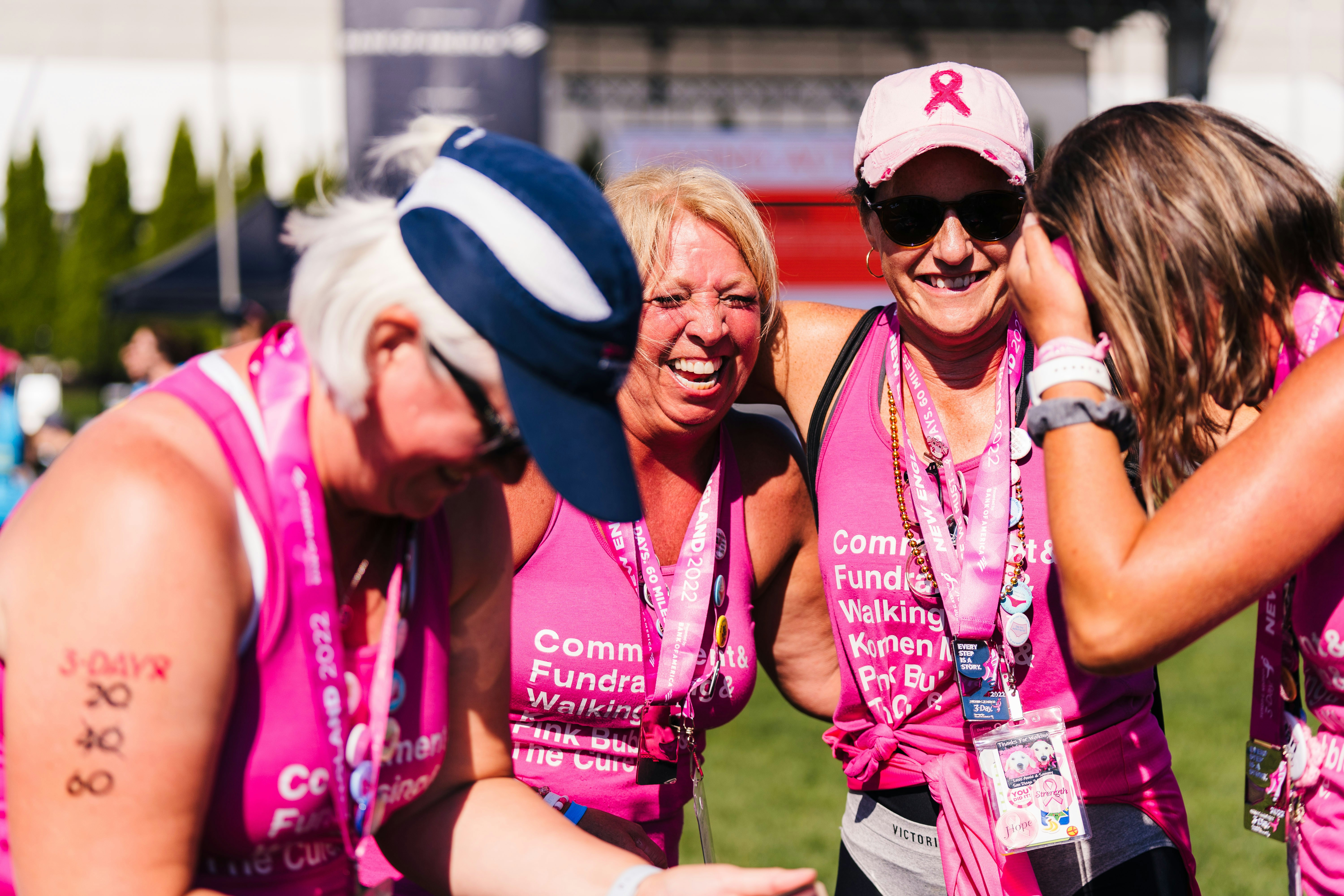
Philanthropy at major events is not a new phenomenon. Charity galas have anchored fashion weeks for half a century. amfAR has been raising tens of millions at Cannes since the 1990s. Polo benefits, hospital fundraisers, and celebrity auctions have raised real money for as long as the modern event calendar has existed. What is new is not the act of giving. What is new is where giving now sits in the architecture of the event itself.
Walk the perimeter of any major global event in 2026, and two parallel economies run side by side. One is the official commercial program. The sponsorship tiers, the branded suites, and the on-site activations are engineered to extract attention and convert it to lead data. The other is quieter, more recent in its current form, and arguably more interesting. Charity functions are embedded inside the art fair sales infrastructure. Community awards on Formula 1 fanzone stages. Water-access coalitions launched out of the Davos plenary sessions. Meal-box programs run from racing paddocks. The biggest moments on the cultural calendar are increasingly being engineered so the act of attending, transacting, or activating also moves capital toward causes. The brands that show up best are the ones treating that integration as a programming choice rather than a press release.
Call it the generosity layer. It is not a replacement for the older charity-gala model, which continues to do exactly what it has always done. It is a structural shift in how giving is built into the commercial design of the event itself, measured alongside ROI, sponsorship value, and audience growth.
The events that anchor the global calendar are no longer just stages for commerce. They are infrastructure for collective action.
The reason this integration is happening now is structural. Audiences have become harder to reach through advertising, harder to convince through messaging, and considerably easier to move through participation. The shift from advertising economies to participation economies is the defining marketing story of this decade, and the generosity layer is the most participatory form of brand activation that currently exists. It asks the audience not to watch, not to scroll, not to share, but to act. And the events themselves are providing the most credible distribution channel for that ask.
Art Basel and the Embedded Donation
Access by Art Basel is the cleanest example of what the generosity layer looks like at scale. Launched ahead of Art Basel Miami Beach 2023 in collaboration with the digital platform Arcual, Access connects collectors with galleries through a sales mechanism that requires an additional philanthropic contribution at the moment of purchase. The structure is simple. Every artwork sold through Access carries a mandatory donation of at least ten percent of the sale price, directed to either The Miami Foundation or the International Committee of the Red Cross. Buyers do not opt in to generosity. The transaction itself is the generosity.
What makes Access notable is not that it raised money. Art fair charity auctions have raised money for decades. What makes Access notable is that Art Basel built giving into the core sales infrastructure, not the after-party. The platform debuted with works by Hernan Bas, Katherine Bradford, Jenny Holzer, Angel Otero, and more than a dozen participating galleries. The signal to collectors was structural. Serious participation in this market now includes a giving component. The signal to other event operators was equally structural. Philanthropy can be a product feature.
The same instinct shows up across Miami Art Week in different formats. Fiat auctioned three custom 500e electric vehicles designed in collaboration with Armani, Bulgari, and Kartell, with proceeds directed to environmental causes. Absolut Elyx ran a multi-city water-truck activation with Water For People, culminating in a sculpture auction at Art Basel Miami Beach. Each of these is a recognizable pattern. Take the most photographed image of the week, attach it to a cause, let the audience do the amplification.
Formula 1 and the Paddock as Platform
Few event franchises have moved as deliberately into the generosity layer as Formula 1. The sport now operates a portfolio of supported charities, including Make-A-Wish International, Mission 44, Race Against Dementia, and Great Ormond Street Hospital, with race weekends used as fundraising and engagement platforms across the 24-race calendar. In the first half of 2024 alone, F1-supported charities raised more than £500,000 and hosted more than 300 children across paddock tours, driver Q&As, and trackside experiences.
The more structurally interesting development arrived in 2025 with the launch of the F1 Allwyn Global Community Award. Built around F1’s multi-year partnership with the lottery operator Allwyn, the award places local community organizations on a global stage, with a rotating panel of judges from F1, Allwyn, and the local race promoter selecting winners at each Grand Prix. Each winner receives a €100,000 donation, a trophy presented on the F1 Fan zone stage, and a trip to a Grand Prix. The inaugural award went to Stichting HandicapNL, a Dutch organization focused on making festivals and major events accessible for people with disabilities.
The award is not a donation made adjacent to the race. It is part of the race weekend, presented in the same physical space where fans gather to watch cars qualify.
Read the structure carefully. A commercial partnership between F1 and a gambling operator is being deployed as a recurring local-impact mechanism, with the event itself as the distribution channel. This is the participation economy logic applied to philanthropy. Beyond the award, F1 has donated more than 21,000 nutritious meal boxes to families in Bromley since 2024 through a partnership with the local council. That is a quieter program than the fanzone awards ceremony, but it is the kind of sustained, locally rooted giving that builds the brand asset no trackside billboard ever could.
Davos and the Coalition Launch
At the institutional end of the spectrum, the World Economic Forum has spent the last several years turning Davos into a launchpad for corporate-philanthropic coalitions. The 2024 launch of GAEA, Giving to Amplify Earth Action, was framed explicitly as a vehicle to unlock the trillions of dollars in annual financing required to reach net zero and reverse nature loss. The mechanism is the public-private-philanthropic partnership, a structure designed to bring corporate balance sheets into proximity with philanthropic capital and government policy.
Davos 2026 extended the pattern. The Get Blue platform was launched on behalf of Water.org, bringing Amazon, Gap, Starbucks, and Ecolab together to scale clean water access from 85 million people to a target of 200 million by 2030. The ACT Ocean initiative consolidated business engagement on ocean priorities under a single umbrella, with strategic agreements signed with the UAE government and the Water Resilience Coalition. The 2026 GAEA Awards recognized partnerships across five categories, presented during the annual meeting.
The Davos pattern reveals something specific about how giving functions at events. Announcements made on the Magic Mountain carry coalition weight that the same announcements would not carry if released from a corporate communications office. The event provides validation, distribution, and a built-in audience of decision-makers. For the brands involved, the giving commitment is also a positioning decision. A public alignment with a set of partners and causes that becomes part of the corporate identity going forward.
Why the Generosity Layer Works
Three forces explain why giving has moved from the periphery of major event programming to its center.
Participation outperforms exposure. Audiences at global events are sophisticated, time-pressured, and over-marketed. A logo on a step-and-repeat is a low-trust signal. A meaningful donation tied to attendance, or an integrated charitable mechanism inside a transaction, is a high-trust signal. The conversion math favors the latter.
Local relevance is a moat. Every host city carries an audience the event has imported and a community the event has displaced or strained. Brands that program for the local layer, whether that means food access in race host cities, accessibility infrastructure at festivals, or water systems in resource-stressed regions, earn a kind of permission that no amount of paid media can manufacture. F1’s meal-box partnership with Bromley is a more durable brand asset than any trackside billboard.
Generosity is a defensible category. In a saturated activation landscape where every brand has access to the same AI photo booths, VR experiences, and influencer rosters, integrated giving is one of the few moves competitors cannot easily replicate. A genuine partnership with a charity takes time to build, time to operationalize, and time to earn credibility for. That difficulty is the asset.
The Forward Read
The next phase will move past the announcement-and-photo-op model toward measurable, audience-facing impact tied to specific event moments. The charity gala will continue to exist. The benefit auction will continue to exist. What will grow alongside them is the embedded mechanism. More transaction-built giving in the Access mold. More local-impact awards in the F1 Allwyn mold. More coalition launches in the Davos GAEA mold. Expect brands that have historically treated philanthropy as a tax line to begin treating it as a marketing channel, and brands that have historically treated marketing as a sales lever to begin treating it as a values lever.
The events that anchor the global calendar were built on the premise that gathering people together creates value. The generosity layer extends that premise. Gathering people together also creates the conditions for collective action, and the architecture is finally catching up. For the brands paying attention, that is the activation worth building.
8 min read

