FESTIVALS News
Step into the corridors of power. Uncover the strategic maneuvers, pivotal debates, and landmark decisions that mold our nation's future. With incisive analysis and behind-the-scenes insights, we empower you to decode the intricate dynamics of today's political arena.
Across the global travel industry, the fastest-growing customer profile is the traveler whose decision starts with what is happening, not where it is. According to Fortune Business Insights, the global event tourism market reached $1.54 trillion in 2025 and is projected to grow to $2.97 trillion by 2034, meaningfully faster than the broader global travel and tourism sector. What is driving the gap is a structural shift in how a generation of consumers chooses where to go. Travel is no longer organized around a destination. It is organized around a moment.
The math the calendar has unlocked
The pattern is consistent across markets. Art Basel Miami Beach in December pushes hotel occupancy in Miami Beach above 90 percent, with spillover into Brickell, the Design District, Aventura, and Bal Harbour. Milan Design Week pushes Milan hotel occupancy past 95 percent in April. SXSW functions as a one-week economic stimulus for Austin in March. The cities that have built the strongest event calendars have given themselves the most powerful marketing infrastructure available in the modern travel economy. They have built reasons to fly.
According to the office of California Governor Gavin Newsom, Coachella generated an estimated $908 million in media impact value in 2025, and together with Stagecoach, it contributes more than $700 million annually to the state economy. The festival audience is no longer one demographic. Over two decades, Coachella has expanded from a niche music festival into a multi-generational cultural fixture that draws families, fashion buyers, brand teams, content creators, and traditional music fans all within the same weekend. The Coachella playbook has been replicated across the calendar. Food vendors, including Tao Group, Erewhon pop-ups, and various Michelin-starred chef collaborations, have made the festival a culinary destination as much as a music one. Brand activations along the polo grounds from American Express, Heineken, Revolve, and various beauty brands have made it a defining annual brand moment.
Why the date became the destination
A Charli XCX brat green wall on a TikTok feed will generate more bookings to a city than three months of conventional destination marketing. The cities that have built event calendars are the ones the algorithm rewards. Miami has Art Basel and F1. Las Vegas has CES, F1, and Sphere residencies. Austin has SXSW. Milan has Salone. Monaco has the Grand Prix and the Yacht Show. Each city has earned its place by programming an event worth flying for.
The traveler showing up is the highest-yield segment of the broader travel economy. Younger, higher-income, willing to spend disproportionately on a single trip, motivated by what is happening rather than where it is. They book yacht space before flights, reserve dinners before hotels, and arrive with specific outfit decisions tied to specific nights. The hospitality industry has reorganized around this segment. Premium concierge services such as Quintessentially, Knightsbridge Circle, and Inspirato
organize their annual calendars around major event weeks because their members do.
The brand layer
Event-led travel has driven a parallel surge in growth in the brand-activation economy surrounding it. Erewhon turned the Hailey Bieber smoothie into a permanent fixture by releasing it in time for awards season. Aimé Leon Doré times its biggest drops to the U.S. Open and the New York Marathon. Telfar releases its most coveted Bag Security Programs around fashion week. The brands that have integrated their product calendar into the cultural calendar are operating with structural advantages that compound year after year.
Jacquemus has built a global brand on the principle that runway shows can be travel destinations. The 2019 lavender field in Provence. The 2022 salt flats show outside Marseille. The 2023 Versailles show. Each one became not just a fashion moment but a destination event, with the global press and editor community arriving the day before and staying through. The lavender field generated more than 30 million social impressions in its first 48 hours after the runway.
The hotel category has responded as aggressively as any. The Standard, the Edition, the Faena, the Soho House Houses, the Aman properties, and the Six Senses retreats all now operate with programming calendars synchronized with the major events of the cities they sit in. The Faena Miami Beach during Art Basel runs a different version of itself than the Faena Miami Beach in March. The hotels have learned that the recurring annual event week is the most commercially important window of the year.
The cities leading the category
A small number of cities are emerging as the clear leaders in event-led tourism. Miami, with its calendar built around F1 in May, Miami Music Week in March, Art Basel in December, and a year-round secondary calendar including the Miami Open, the Boat Show, Miami Swim Week, and eMerge Americas. Las Vegas, with CES in January, F1 in November, and the Sphere residencies. Austin, with SXSW in March, F1 in October, and Austin City Limits. Outside the United States, the leaders are Milan, Paris, Monaco, Singapore, Dubai, and an emerging set of cities, including Riyadh, Mumbai, and Mexico City, are building their own cultural calendars to compete for the same global high-yield traveler.
Each city operates with its own version of the same playbook. Anchor the year with a major recurring fixture. Layer additional fixtures across the calendar. Build the hospitality, retail, and entertainment infrastructure to support the audience the calendar attracts. Compound the equity year over year.
What the next decade will reward
The 2026 FIFA World Cup, the United States 250th anniversary in 2026, the 2028 Los Angeles Summer Olympics, and the 2034 Salt Lake City Winter Games will play out across U.S. cities over the next decade. Each raises the bar for what a global event's audience expects from a host city between marquee events. The cultural destination event has moved from a marketing exercise to the underlying business model. The traveler will keep flying. The cities that program the calendar she organizes her year around are the ones that get the booking.
Across the global travel industry, the fastest-growing customer profile is the traveler whose decision starts with what is happening, not where it is. According to Fortune Business Insights, the global event tourism market reached $1.54 trillion in 2025 and is projected to grow to $2.97 trillion by 2034, meaningfully faster than the broader global travel and tourism sector. What is driving the gap is a structural shift in how a generation of consumers chooses where to go. Travel is no longer organized around a destination. It is organized around a moment.
The math the calendar has unlocked
The pattern is consistent across markets. Art Basel Miami Beach in December pushes hotel occupancy in Miami Beach above 90 percent, with spillover into Brickell, the Design District, Aventura, and Bal Harbour. Milan Design Week pushes Milan hotel occupancy past 95 percent in April. SXSW functions as a one-week economic stimulus for Austin in March. The cities that have built the strongest event calendars have given themselves the most powerful marketing infrastructure available in the modern travel economy. They have built reasons to fly.
According to the office of California Governor Gavin Newsom, Coachella generated an estimated $908 million in media impact value in 2025, and together with Stagecoach, it contributes more than $700 million annually to the state economy. The festival audience is no longer one demographic. Over two decades, Coachella has expanded from a niche music festival into a multi-generational cultural fixture that draws families, fashion buyers, brand teams, content creators, and traditional music fans all within the same weekend. The Coachella playbook has been replicated across the calendar. Food vendors, including Tao Group, Erewhon pop-ups, and various Michelin-starred chef collaborations, have made the festival a culinary destination as much as a music one. Brand activations along the polo grounds from American Express, Heineken, Revolve, and various beauty brands have made it a defining annual brand moment.
Why the date became the destination
A Charli XCX brat green wall on a TikTok feed will generate more bookings to a city than three months of conventional destination marketing. The cities that have built event calendars are the ones the algorithm rewards. Miami has Art Basel and F1. Las Vegas has CES, F1, and Sphere residencies. Austin has SXSW. Milan has Salone. Monaco has the Grand Prix and the Yacht Show. Each city has earned its place by programming an event worth flying for.
The traveler showing up is the highest-yield segment of the broader travel economy. Younger, higher-income, willing to spend disproportionately on a single trip, motivated by what is happening rather than where it is. They book yacht space before flights, reserve dinners before hotels, and arrive with specific outfit decisions tied to specific nights. The hospitality industry has reorganized around this segment. Premium concierge services such as Quintessentially, Knightsbridge Circle, and Inspirato
organize their annual calendars around major event weeks because their members do.
The brand layer
Event-led travel has driven a parallel surge in growth in the brand-activation economy surrounding it. Erewhon turned the Hailey Bieber smoothie into a permanent fixture by releasing it in time for awards season. Aimé Leon Doré times its biggest drops to the U.S. Open and the New York Marathon. Telfar releases its most coveted Bag Security Programs around fashion week. The brands that have integrated their product calendar into the cultural calendar are operating with structural advantages that compound year after year.
Jacquemus has built a global brand on the principle that runway shows can be travel destinations. The 2019 lavender field in Provence. The 2022 salt flats show outside Marseille. The 2023 Versailles show. Each one became not just a fashion moment but a destination event, with the global press and editor community arriving the day before and staying through. The lavender field generated more than 30 million social impressions in its first 48 hours after the runway.
The hotel category has responded as aggressively as any. The Standard, the Edition, the Faena, the Soho House Houses, the Aman properties, and the Six Senses retreats all now operate with programming calendars synchronized with the major events of the cities they sit in. The Faena Miami Beach during Art Basel runs a different version of itself than the Faena Miami Beach in March. The hotels have learned that the recurring annual event week is the most commercially important window of the year.
The cities leading the category
A small number of cities are emerging as the clear leaders in event-led tourism. Miami, with its calendar built around F1 in May, Miami Music Week in March, Art Basel in December, and a year-round secondary calendar including the Miami Open, the Boat Show, Miami Swim Week, and eMerge Americas. Las Vegas, with CES in January, F1 in November, and the Sphere residencies. Austin, with SXSW in March, F1 in October, and Austin City Limits. Outside the United States, the leaders are Milan, Paris, Monaco, Singapore, Dubai, and an emerging set of cities, including Riyadh, Mumbai, and Mexico City, are building their own cultural calendars to compete for the same global high-yield traveler.
Each city operates with its own version of the same playbook. Anchor the year with a major recurring fixture. Layer additional fixtures across the calendar. Build the hospitality, retail, and entertainment infrastructure to support the audience the calendar attracts. Compound the equity year over year.
What the next decade will reward
The 2026 FIFA World Cup, the United States 250th anniversary in 2026, the 2028 Los Angeles Summer Olympics, and the 2034 Salt Lake City Winter Games will play out across U.S. cities over the next decade. Each raises the bar for what a global event's audience expects from a host city between marquee events. The cultural destination event has moved from a marketing exercise to the underlying business model. The traveler will keep flying. The cities that program the calendar she organizes her year around are the ones that get the booking.
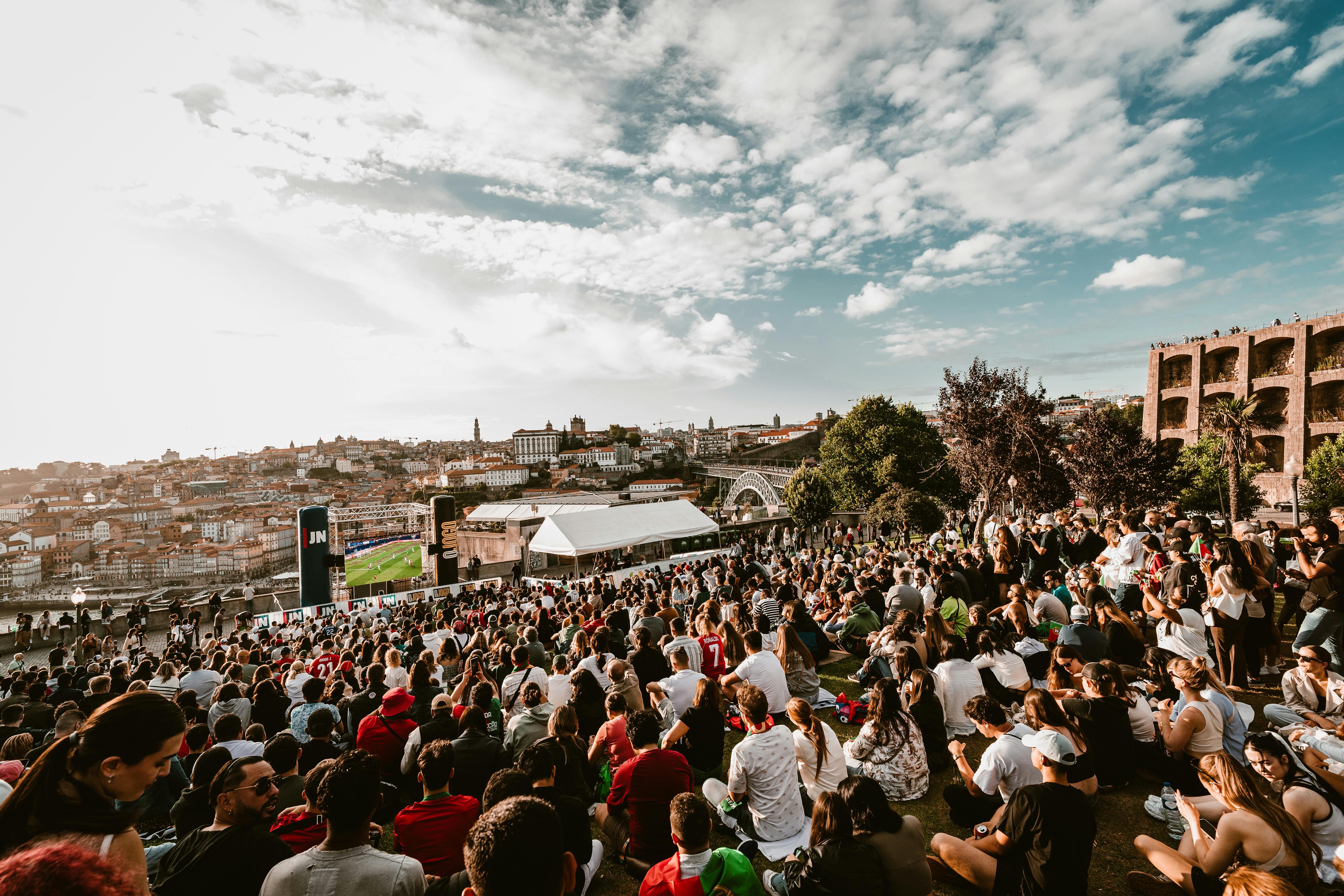
Across the global travel industry, the fastest-growing customer profile is the traveler whose decision starts with what is happening, not where it is. According to Fortune Business Insights, the global event tourism market reached $1.54 trillion in 2025 and is projected to grow to $2.97 trillion by 2034, meaningfully faster than the broader global travel and tourism sector. What is driving the gap is a structural shift in how a generation of consumers chooses where to go. Travel is no longer organized around a destination. It is organized around a moment.
The math the calendar has unlocked
The pattern is consistent across markets. Art Basel Miami Beach in December pushes hotel occupancy in Miami Beach above 90 percent, with spillover into Brickell, the Design District, Aventura, and Bal Harbour. Milan Design Week pushes Milan hotel occupancy past 95 percent in April. SXSW functions as a one-week economic stimulus for Austin in March. The cities that have built the strongest event calendars have given themselves the most powerful marketing infrastructure available in the modern travel economy. They have built reasons to fly.
According to the office of California Governor Gavin Newsom, Coachella generated an estimated $908 million in media impact value in 2025, and together with Stagecoach, it contributes more than $700 million annually to the state economy. The festival audience is no longer one demographic. Over two decades, Coachella has expanded from a niche music festival into a multi-generational cultural fixture that draws families, fashion buyers, brand teams, content creators, and traditional music fans all within the same weekend. The Coachella playbook has been replicated across the calendar. Food vendors, including Tao Group, Erewhon pop-ups, and various Michelin-starred chef collaborations, have made the festival a culinary destination as much as a music one. Brand activations along the polo grounds from American Express, Heineken, Revolve, and various beauty brands have made it a defining annual brand moment.
Why the date became the destination
A Charli XCX brat green wall on a TikTok feed will generate more bookings to a city than three months of conventional destination marketing. The cities that have built event calendars are the ones the algorithm rewards. Miami has Art Basel and F1. Las Vegas has CES, F1, and Sphere residencies. Austin has SXSW. Milan has Salone. Monaco has the Grand Prix and the Yacht Show. Each city has earned its place by programming an event worth flying for.
The traveler showing up is the highest-yield segment of the broader travel economy. Younger, higher-income, willing to spend disproportionately on a single trip, motivated by what is happening rather than where it is. They book yacht space before flights, reserve dinners before hotels, and arrive with specific outfit decisions tied to specific nights. The hospitality industry has reorganized around this segment. Premium concierge services such as Quintessentially, Knightsbridge Circle, and Inspirato
organize their annual calendars around major event weeks because their members do.
The brand layer
Event-led travel has driven a parallel surge in growth in the brand-activation economy surrounding it. Erewhon turned the Hailey Bieber smoothie into a permanent fixture by releasing it in time for awards season. Aimé Leon Doré times its biggest drops to the U.S. Open and the New York Marathon. Telfar releases its most coveted Bag Security Programs around fashion week. The brands that have integrated their product calendar into the cultural calendar are operating with structural advantages that compound year after year.
Jacquemus has built a global brand on the principle that runway shows can be travel destinations. The 2019 lavender field in Provence. The 2022 salt flats show outside Marseille. The 2023 Versailles show. Each one became not just a fashion moment but a destination event, with the global press and editor community arriving the day before and staying through. The lavender field generated more than 30 million social impressions in its first 48 hours after the runway.
The hotel category has responded as aggressively as any. The Standard, the Edition, the Faena, the Soho House Houses, the Aman properties, and the Six Senses retreats all now operate with programming calendars synchronized with the major events of the cities they sit in. The Faena Miami Beach during Art Basel runs a different version of itself than the Faena Miami Beach in March. The hotels have learned that the recurring annual event week is the most commercially important window of the year.
The cities leading the category
A small number of cities are emerging as the clear leaders in event-led tourism. Miami, with its calendar built around F1 in May, Miami Music Week in March, Art Basel in December, and a year-round secondary calendar including the Miami Open, the Boat Show, Miami Swim Week, and eMerge Americas. Las Vegas, with CES in January, F1 in November, and the Sphere residencies. Austin, with SXSW in March, F1 in October, and Austin City Limits. Outside the United States, the leaders are Milan, Paris, Monaco, Singapore, Dubai, and an emerging set of cities, including Riyadh, Mumbai, and Mexico City, are building their own cultural calendars to compete for the same global high-yield traveler.
Each city operates with its own version of the same playbook. Anchor the year with a major recurring fixture. Layer additional fixtures across the calendar. Build the hospitality, retail, and entertainment infrastructure to support the audience the calendar attracts. Compound the equity year over year.
What the next decade will reward
The 2026 FIFA World Cup, the United States 250th anniversary in 2026, the 2028 Los Angeles Summer Olympics, and the 2034 Salt Lake City Winter Games will play out across U.S. cities over the next decade. Each raises the bar for what a global event's audience expects from a host city between marquee events. The cultural destination event has moved from a marketing exercise to the underlying business model. The traveler will keep flying. The cities that program the calendar she organizes her year around are the ones that get the booking.
5 min read

