There are perhaps fifteen cities globally where, in any given week, you can walk into a room and find five people whose decisions will shape some part of the global economy. Most have specialized. New York is finance and media. London is the home of the finance and creative industries. Paris is fashion and government. Milan is design and luxury. Tokyo is technology. Singapore is the gateway to Southeast Asia. Hong Kong remains a critical cross-border financial hub. Dubai is the new center of cross-regional commerce in the Gulf, Africa, and South Asia. Miami has become the new American cultural capital. The traveler who can navigate these cities earns a kind of access that is essentially impossible to replicate any other way.
New York
The densest single-city financial market anywhere. Manhattan, from the Battery to roughly 96th Street, holds more capital-allocation power than any equivalent geography. The major investment banks, the largest asset managers, the venture capital funds, and the technology firms that have moved meaningful operations into the city all sit within walking distance of each other. Recurring fixtures include the Robin Hood Foundation gala in May, the Met Gala on the first Monday in May, New York Fashion Week in February and September, the U.S. Open in late August, and the U.N. General Assembly in late September. The hospitality infrastructure is unmatched. Casa Cipriani, Zero Bond, the Mark Hotel, the Ned NoMad, the Carlyle, Carbone, the Polo Bar, and ZZ's Club each operate as known quantities for high-value introductions.
London
London is the most international networking city in the world. The combination of the financial industry centered around the City and Canary Wharf, the global creative industries centered around Soho, Mayfair, and Shoreditch, and the still-significant role of the British monarchy and political establishment makes London uniquely positioned for cross-sector networking. Mayfair restaurants, including Annabel's, 5 Hertford Street, Maison Estelle, and George's, remain reliably stocked with the global ultra-high-net-worth audience that other cities pull together only on specific dates. The summer London social season, from the Chelsea Flower Show through Royal Ascot to Wimbledon and Henley, anchors the city's most consequential annual networking calendar.
Paris
Paris is the global capital of fashion and one of the defining cities for art, government, and cross-European networking. Fashion weeks in February and September pull the entire global fashion industry to the city. Haute couture weeks in January and July pull the highest-tier luxury clients to a smaller, more edited calendar. The Hôtel de Crillon, Le Bristol, the Ritz Paris, and the Cheval Blanc are filled with the global luxury and fashion audience. Beyond fashion, Paris is a defining global art market,
with the launch of Art Basel Paris in October. The 2024 Paris Olympics reset the city's global event infrastructure for a generation.
Milan
Milan operates as the European capital of design and luxury manufacturing. Salone del Mobile in April fills the city with the global design industry for a week. Milan Fashion Week in February and September brings the Italian luxury industry into a single concentrated calendar. The Bulgari Hotel, the Mandarin Oriental, the Four Seasons, and the Portrait Milano operate as informal industry headquarters during the major fixtures.
Davos
For one week each January, the Swiss Alpine town of Davos becomes the densest concentration of senior global decision-makers anywhere. The World Economic Forum's annual meeting brings heads of state, CEOs, central bankers, and the broader global policy establishment to a town that, for fifty-one weeks of the year, is a quiet ski destination. The unofficial programming, including side dinners and parallel conferences, takes place across the Belvédère, the Seehof, and the Schatzalp. Networks, including the 100 Women @ Davos network, operate parallel programming that has become, for participating attendees, more impactful than the official WEF agenda.
Singapore, Tokyo, Hong Kong, Dubai, Riyadh
Singapore is the most reliable gateway for Western firms doing business in Southeast Asia, with fixtures including the F1 Singapore Grand Prix in October and ART SG in January. Tokyo combines a deep technology and consumer goods industry with an increasingly sophisticated arts and design scene. Hong Kong remains a critical cross-border financial hub with relationships across mainland China and the Asia-Pacific that cannot be replicated quickly.
The Gulf has emerged as a strategically important region for global business networking. Dubai's annual programming has matured into a year-round cultural calendar, with Art Dubai, Dubai Watch Week, and Dubai Design Week. The Louvre Abu Dhabi and the forthcoming Guggenheim Abu Dhabi have added cultural infrastructure that complements Dubai's commercial role. Riyadh has expanded its event infrastructure with Diriyah Season and Riyadh Season as part of Vision 2030. The 2034 FIFA World Cup will accelerate this trajectory.
Miami and Los Angeles
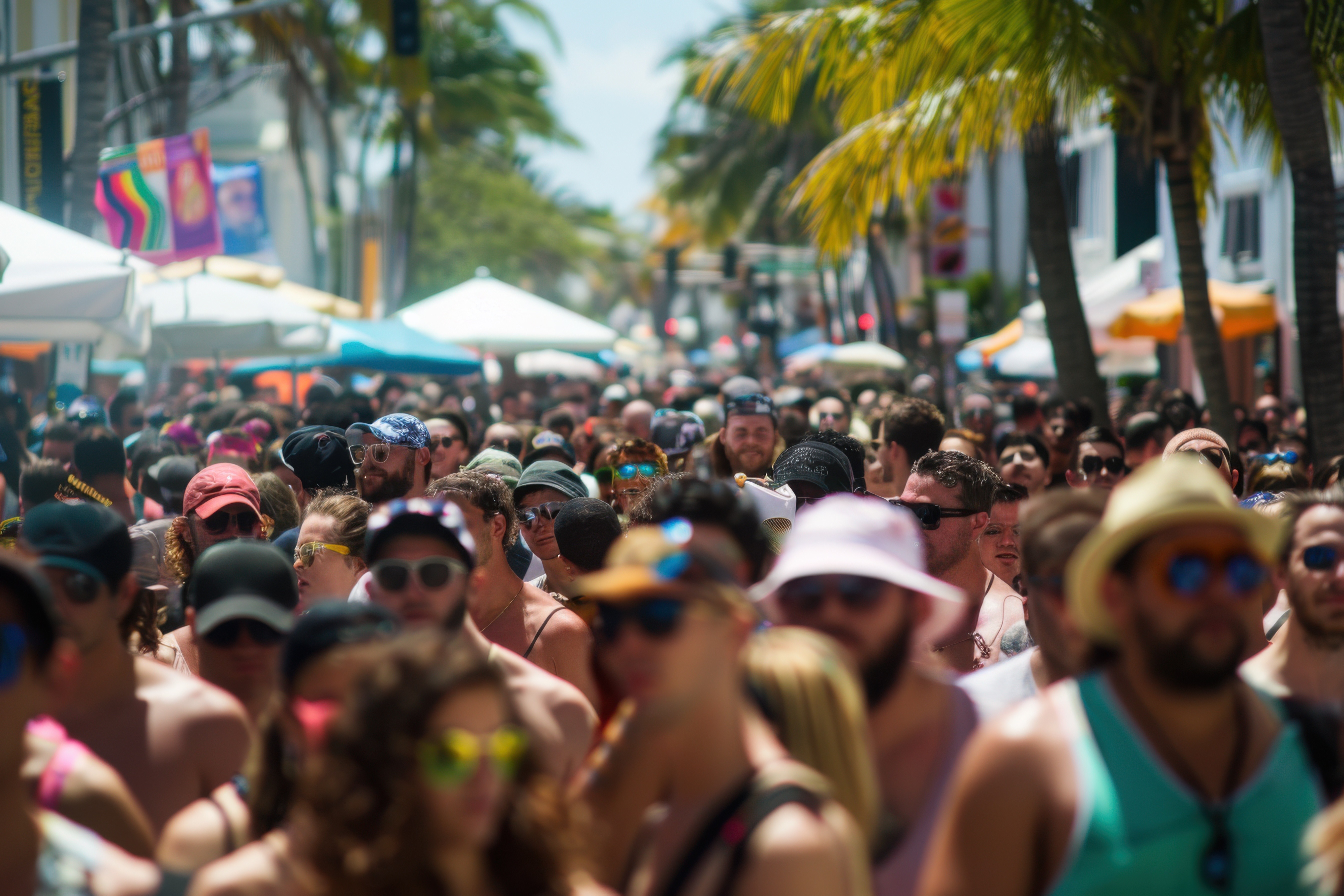
In the Americas, Miami and Los Angeles operate as the two most important cultural and networking capitals outside New York. Miami's calendar, anchored by Art Basel in December, F1 in May, and Miami Music Week in March, has built the city into a critical cross-American hub for finance, technology, hospitality, and creative industries. Los Angeles serves as the entertainment industry's capital, with fixtures including the Oscars in March, Coachella in April, and a year-round calendar of private events. Soho House Holloway House, the San Vicente Bungalows, the Sunset Tower, the Beverly Hills Hotel, and Cipriani Beverly Hills operate as industry meeting points.
How to use these cities
The mistake most ambitious operators make is treating each city as a one-time visit. The cities that compound for a career are the ones the operator returns to repeatedly, on the same calendar fixtures, year after year. The relationships that matter take three or four years of recurring presence to develop. The Davos contact made in January 2024 is more valuable in January 2027 because three additional years of running into each other have layered onto the original meeting. The same is true of Cannes Lions, of Salone, of Art Basel, of every recurring fixture on the global calendar. The strategic question is not which city to visit. It is which one to commit to, multiple times a year, for the next decade. The single trip is a tourist trip. The repeated annual visit is a strategy.